Every year, BLICKFANG’s trend scouts set out in search of extraordinary labels and inspiring design ideas. The most promising newcomers are awarded a sponsored exhibition space through the D.E.S.I.G.N. Foundation as part of the Future Forward award, giving young talents the opportunity to present themselves to a wide audience. In this way, BLICKFANG ensures that the creative visions of tomorrow step into the spotlight today. This year in Stuttgart, two winners will enrich the scene with their innovative concepts: Pa:ul Design and Hana Hillerova.
Hana Hillerova
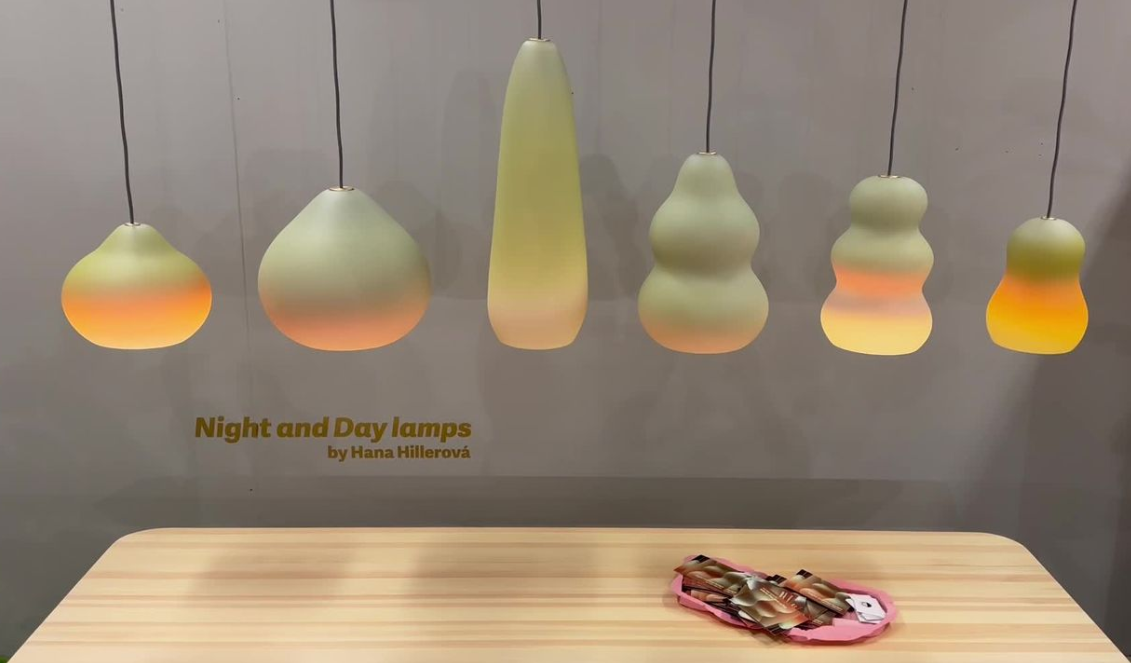
Czech designer Hana Hillerova is renowned for her innovative glass art. After completing her training in Prague and the USA, she returned to her hometown to merge art and design through glass. Hana’s Night and Day lamps are a fascinating example of her creative glasswork. They use silver-bearing glass, which glows in soft shades of grey, ochre, and green during the day, and transforms into a fiery play of orange, pink, and ochre by night. Each lamp is a handcrafted one-of-a-kind creation that seamlessly combines art and functionality in a distinctive way.


Pa:ul Design
Pa:ul is the creative alter ego of Ulrich Pape, an innovative mind from Munich with many years of experience as Head of Design at Peter Haimerl Architecture. Ulrich is dedicated to challenging the laws of gravity and playing with the boundaries of perception. This pursuit led to the creation of the “Architect’s Bed.” Freestanding and balanced with an almost surreal lightness, the soft, delicate mattress is supported by a massive, stone-like block. It’s a piece of furniture that doesn’t just fill a space – it transforms it.


Every year, BLICKFANG’s trend scouts set out in search of exceptional labels and inspiring design ideas. The most promising newcomers are awarded a sponsored exhibition space through the D.E.S.I.G.N. Foundation as part of the “Future Forward” award, which gives young talents the opportunity to present themselves to a wide audience. In this way, BLICKFANG ensures that the creative visions of tomorrow step into the spotlight today. This year in Basel, two winners will enrich the scene with their innovative concepts: Pa:ul Design and Zeitgeiss.
Pa:ul Design
Pa:ul is the creative alter ego of Ulrich Pape, an innovative mind from Munich with many years of experience as Head of Design at Peter Haimerl Architecture. Ulrich is dedicated to challenging the laws of gravity and playing with the boundaries of perception. This pursuit led to the creation of the “Architect’s Bed.” Freestanding and balanced with an almost surreal lightness, the soft, delicate mattress is supported by a massive, stone-like block. It’s a piece of furniture that doesn’t just fill a space – it transforms it. A true architectural statement for the bedroom that can be experienced live at BLICKFANG.
Zeitgeiss
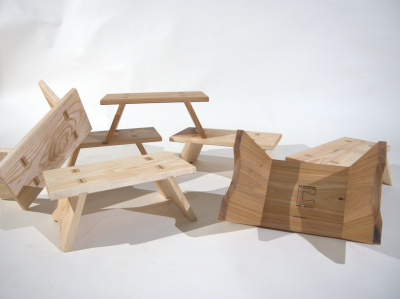
The design label ZEITGEISS by Fabian Weber uniquely merges art and design. At BLICKFANG, Fabian presents his project HundertHocker – a vision to create a collection of 100 stools that share the same form yet surprise with a wide variety of materials and interpretations. Collaborating with creative minds from around the world, the collection is steadily growing – currently consisting of 23 stools. ZEITGEISS thrives on innovation and diversity, with each piece inspiring both as a functional design object and a work of art.


From prototypes to crowd favorites – the competition for students
BLICKFANG Hamburg is also a place of discovery for the design stars of tomorrow. Young designers present their prototypes and ideas as part of the student competition. This competition not only offers participants valuable feedback, but also the opportunity to take their first steps into the professional design world. Here, new things are tried out and the boundaries of the familiar are pushed – the perfect place to discover innovative concepts.
Moritz Glatte: Flexible design for modern rooms – the “Block”
Moritz Glatte studies at the Berlin University of the Arts and presents the “Block”, a space-saving, flexible solution for modern working environments. The desk can be transformed from a fully-fledged workstation into a compact cube in no time at all, which is both practical and aesthetically pleasing. The folding mechanism compresses the desk to a minimum, while the drawer provides space for work materials and personal items.
The “Block” is perfect for coworking spaces or tiny houses, where every surface needs to be put to good use. Handcrafted and available in different colors and finishes, this desk is a practical, space-saving solution that combines function and design in a unique way.
Moritz Glatte is one of the winners of the BLICKFANG Stuttgart design award.


Kim Görlich and Fleur Siedler: The “WinkelWunder” shelf – flexible and adaptable
The “WinkelWunder” by Kim Görlich and Fleur Siedler from Mainz University of Applied Sciences is a real highlight for anyone looking for flexible and functional furniture. The shelf impresses with its innovative adaptability and can be easily adapted to roof pitches with angles of inclination of 70 to 170 cm. The designers combine sustainability and minimalist aesthetics with clever functionality.


The shelves, which are fixed to dowels in the frame, are given additional stability by a clever tensioning system of elastic bands. This system not only ensures that the shelves remain secure, but
also reinforces the entire construction. Made from hard-wearing ash wood and textile, the shelf is not only functional, but also sustainable and minimalist in design – a real asset to any home
Yoomin Sun: “Wirewirewire” – Knitted elegance in stainless steel
The young designer Yoomin Sun, originally from Seoul, is in her 7th semester at the University of Applied Arts in Vienna. In her work, she combines aesthetics with intelligent construction and explores the structure of objects through the interplay of material and form.
Her series Wirewirewire revolutionizes the use of metal by processing stainless steel in a knitted structure – without any welding. Unlike conventional wire mesh, the individual loops are connected with a simple hooking system, similar to knitted textiles. The result: exceptional material tension that combines stability and flexibility. While the mesh remains resistant on one side, it can be folded on the other.
The innovative design makes Wirewirewire not only lightweight, but also sustainable. The stainless steel is fully recyclable, the use of materials is minimal and the construction allows for easy repair. A single wire is weak – but this unique connection creates a robust, filigree structure that sets new standards in furniture design.


Discovering young creativity
The special student competition area at BLICKFANG Hamburg is an absolute must for all design enthusiasts who want to support young creative talent and discover innovative ideas. This is where experimental design meets functional solutions, and the works of the young designers prove that the future of design is anything but boring.
A visit to this special area means not only seeing exciting prototypes and concepts, but also getting to know the creative minds behind the ideas. Take the opportunity to be inspired and maybe even meet the next design star!
Get your ticket for BLICKFANG Hamburg now!
Loyal exhibitors at BLICKFANG – we say THANK YOU!
Our long-standing exhibitors are the heart of BLICKFANG and make the event a special experience every year. With their passion for design and their craftsmanship, they enrich BLICKFANG time and time again and bring their unique creations directly to you.
Das Kleine B

Do you remember the first time you took part in BLICKFANG? When and where was it?
Yes, of course, our first BLICKFANG was in Hamburg, in the Deichtorhallen. It’s a wonderful and fitting place to present design.
How has BLICKFANG benefited you and your company?
The most important thing for us is that we receive direct customer feedback at BLICKFANG. Of course, it’s fun to experience the enthusiasm of customers and to receive encouragement for our own work. But direct contact is also very important for us. On the one hand, because we also show prototypes here and the immediate reactions of visitors show us whether we are on the right track. On the other hand, we have set ourselves the goal of creating furniture that will accompany its owners for a lifetime. To achieve this, it must be timelessly beautiful and flexible. In concrete terms, this means that the furniture must be adaptable to requirements. That’s why we already think about the realities of our customers’ lives during the design process. Direct contact helps enormously. And since we sell the majority of our products via our online store, a trade fair is a good opportunity for this.
What does BLICKFANG mean to you?
We moved our company from Hamburg to Padborg in Denmark 1.5 years ago. That’s why BLICKFANG in Hamburg means a lot to us – it’s like coming home. Here we meet people who have been with us for a long time – as customers, traders, journalists or colleagues from the industry.
Why is BLICKFANG still a fixed date in your calendar?
We have found a distribution mix that works for us: First and foremost is our online store, but we also have a few really exceptional stores that sell our products, as well as a few selected online platforms. This is supplemented by trade fairs. Not too many – we’re quite picky about that. But BLICKFANG is and remains a fixed date.


Hafenholz

Do you remember the first time you took part in BLICKFANG? When and where was it?
Our first BLICKFANG was in Hamburg in 2013 – a very special moment for us because it was the first big design fair where we showed our furniture to a wider audience. We were still at the beginning back then, full of ideas, but also with a healthy dose of nervousness. The atmosphere, the appreciation for craftsmanship and design and the curiosity of the visitors picked us up straight away – an introduction that has stayed with us to this day.
How has BLICKFANG benefited you and your company?
BLICKFANG was an important building block for us in building up our customer base. It not only gave us visibility, but also helped us to become known regionally in various cities. The direct contact with people was always particularly valuable for us – real feedback on our products, honest reactions to new ideas and the exchange that lasted beyond the trade fair. This contact with customers has helped us to further develop our range and position our brand authentically.
What does BLICKFANG mean to you?
For us, BLICKFANG means, above all, a genuine exchange. It is one of the few opportunities we have to talk directly to our end customers, hear their opinions and get a feel for how our furniture is “accepted”. This feedback is extremely important for us, especially with new products – it gives us guidance and new inspiration for further development. At the same time, it’s simply great to experience the enthusiasm for our work live.
Why is BLICKFANG still a fixed date in your calendar?
Because it has become a permanent part of our business – both for maintaining existing contacts and for acquiring new customers. In an increasingly digital world, we value personal encounters all the more. BLICKFANG offers us precisely this setting: authentic, direct and high-quality. That’s why it remains a fixed date in our annual calendar.


Eiri

Do you remember the first time you took part in BLICKFANG? When and where was it?
I remember it like it was yesterday – five years ago in Stuttgart. My friend, a designer from Prague, and I thought it would be a great idea to share a stand. Classic move: we arrived stylishly late, just a few minutes before the event started. Just as we were placing the last part of our set-up, the journalists arrived for the press tour. Perfect timing or pure chaos that we covered up with confidence? Who knows …
How has BLICKFANG benefited you and your company?
BLICKFANG has played an important role in Eiri’s growth – not only because it provides a platform for recognition, but also because we meet an exciting and diverse audience there. This diversity is extremely valuable for us, as we can test new ideas, get all kinds of feedback and see how our concepts are received by people with different perspectives and backgrounds. It has become a kind of vibrant laboratory for us, where we can test whether our vision makes sense and whether we are on the right track. It is also inspiring to get to know other exhibitors from Germany and abroad, to exchange ideas and make new contacts.
What does BLICKFANG mean to you?
BLICKFANG stands for design and brings together a great, open community of visitors and exhibitors. It’s a unique platform where I meet people who really understand our brand vision and its authenticity. It’s always a lovely, warm event where I see a lot of really good designs. It’s always a pleasure to meet so many interested and curious people who simply want to be inspired.
Why is BLICKFANG still a fixed date in your calendar?
I think BLICKFANG is one of the rare events where I can introduce Eiri to a design-conscious audience in person – and get direct feedback.


Once again, thanks to our media partners, we will be providing numerous interesting magazines free of charge at BLICKFANG, covering all areas of the home, fashion and lifestyle categories. Help yourself in our media center and take your favorite magazines home with you free of charge.
Here is an overview of the magazines
- Artmapp
- Reportagen
- Ramp
- FOGS
- and many more
Hamburg – hotspot for design and fashion
Hamburg is a vibrant melting pot for design and creation. The scene is diverse: large agencies, internationally established offices, innovative micro-enterprises and young design talents characterize the creative city on the Elbe. We present five Hamburg fashion ateliers from the heart of the Hanseatic city. Together they combine boutique and studio, craftsmanship and innovation. Their work stands for individuality, responsibility and aesthetic excellence.
SPECTRUM Studios: Between tradition and modernity

SPECTRUM Studios combines traditional craftsmanship with modern design and sustainable principles. Since 2011, Birgit Brockbals has been creating collections that focus on longevity, quality and a clear design language – away from short-lived trends. Production takes place in small manufactories and family-run businesses in Germany.
When selecting materials, SPECTRUM Studios consistently focuses on natural raw materials: pure linen, fine wool qualities and vegetable-tanned leather characterize the collections. They are complemented by high-quality deadstock fabrics. Many of the materials come from traditional European weaving mills that specialize in sustainable production and the highest quality.
Every piece from SPECTRUM STUDIOS is the result of a thoughtful design process that focuses on function, form and materiality. SPECTRUM STUDIOS stands for a contemporary interpretation of classic values and invites you to discover something special in the everyday.

Sahra Tehrani Fashion: Fashion as an expression of everyday life
Sahra Tehrani creates fashion that tells stories. Her collection is a declaration of love to everyday life and its hidden beauty. Inspired by small moments – the texture of asphalt, the melancholy of raindrops or the delicacy of hedges – unique one-off pieces are created in her studio in Hamburg’s Marktstraße 117.
The handmade pieces are more than just clothing; they are wearable works of art that combine elegance and nonchalance. Each piece is produced in small series under fair conditions and is an expression of a philosophy that combines individuality, sustainability and artistic expression. The designs can be combined in a variety of ways and emphasize your personality.


Musswessels: Reduction with depth from St. Pauli

Kathrin Musswessels has been developing wearable fashion with intellectual depth with her label MUSSWESSELS since 2009. The collections are created in her own studio in St. Pauli – a creative microcosm in which tailors, pattern designers and art directors work closely together. Their designs are characterized by minimalist shapes, sophisticated cuts and subtle details.
Production is fair and transparent in small sewing factories in Germany and Poland. The fabrics are mostly sourced from overproduction by European textile companies – an approach that is both ecologically and aesthetically pleasing. The collection is complemented by selected vintage pieces. MUSSWESSELS stands for a deliberately different view of fashion – reduced, but never arbitrary.

LUMEN organic: More than fashion – a statement for sustainability


Sandra Mosler-Marien from LUMEN Organic creates far more than just clothing with her slow fashion label. Her designs embody a way of life: conscious, sustainable and stylish. After almost three decades in the fashion industry, she decided to give space to her vision of a holistic understanding of fashion. The vegan label focuses on environmentally friendly materials, fair working conditions and transparent production.
Each item of clothing is produced in small quantities in Hamburg and Schleswig-Holstein from certified or upcycled materials. The collections are characterized by simple elegance, high combinability and a timeless design. The principle of “repairing instead of throwing away” is particularly important to Sandra – a clear appeal to you to consume more consciously and rediscover the value of every item of clothing.
nele industries: Classic Shapes, Urban Attitude

Since 1994, nele industries has stood for fashion that connects craftsmanship, music, and everyday life. Based in Hamburg, the label creates modern classics with a functional focus and a clean silhouette – wearable, durable, and always with a distinct character.
Production takes place in Hamburg and selected European workshops, emphasizing quality and precision over mass manufacturing.
The collections are defined by carefully chosen materials: Swiss cotton, Harris Tweed, denim, jersey, and sweat form the foundation. These textiles are reimagined and crafted to meet the needs of daily life while maintaining a high aesthetic standard.
nele industries appeals to individuals who see clothing not as a fleeting trend, but as a reflection of their values – honest, resilient, and thoughtfully designed.

Discover the creative diversity of Hamburg’s fashion ateliers at BLICKFANG Hamburg from 16 to 18 May 2025 and be inspired by fashion that is more than just a trend – it is a statement of style, quality and responsibility. Experience designs that tell stories and raise your awareness of sustainability. The future of fashion is responsible, aesthetic and unique!
Get your tickets now and be there!
Every year, BLICKFANG trend scouts go in search of outstanding labels and inspiring design ideas. The D.E.S.I.G.N. Foundation provides particularly promising newcomers with a sponsored stand space as part of the “Future Forward” award, which offers young talents the opportunity to present themselves to a broad public. In this way, BLICKFANG ensures that tomorrow’s creative visions are already in the spotlight today. In Hamburg this year, two winners will enrich the scene with their innovative concepts: two hundred tons and Hartholzdesign.
two hundred tons
Adam and Monika Štok share a passion for high-quality design and have been behind their sustainable label “two hundred tons” since 2020. With their UNROLL collection, the two revolutionize conventional furniture design and create larger, stable shapes by “unrolling” steel tubes – without wasting material. The furniture pieces, such as shelves, conference tables and coat hooks, surprise with an organic wave structure that is both aesthetic and functional. UNROLL combines industrial elegance with thoughtful design and shows how metal in its purest form can be surprisingly flexible.


Hartholzdesign
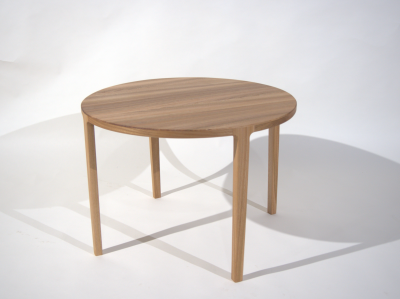
Kalle Warncke stands for passionate craftsmanship and uncompromising quality. Kalle is presenting his “Lohmeyer” coffee table at BLICKFANG, which is representative of his values: A masterpiece of traditional craftsmanship and a prime example of sustainable design. Inspired by a table design from the 1960s, the stool is made from selected knot-free elm wood that is handcrafted in Flensburg. The frames are steam-bent, the legs are mortise-and-tenoned by hand and the crossbars are hand-jointed – all according to the old rules of carpentry.


Adam and Monika Štok share a passion for high-quality design and have been behind their sustainable label “two hundred tons” since 2020. With their UNROLL collection, the two revolutionize conventional furniture design and create larger, stable shapes by “unrolling” steel tubes – without wasting material. UNROLL combines industrial elegance with thoughtful design and shows how metal in its purest form can be surprisingly flexible.

Adam and Monika, your company Two Hundred Tons is impressive! What fascinated you so much about metal forming that you turned it into a successful business?
Our path to pressing began quite by chance – with an aluminum tube in a vice. The resulting shape was fascinating, but initially remained in the drawer. It wasn’t until 2018, when we were working on our first collection, that we realized the potential of this shape. After some experimentation, we created our marshmallow ping pong table – a real eye-catcher!
Then we discovered steel. Its malleability really enchanted us. Sure, there are pitfalls such as cracking or warping when welding. But hey, for us, steel is now like play dough. You can see this in the cool details of our products – from the curved backrest to the elegant table bracing. Who would have thought that so much would come out of a chance experiment?

The name “Two Hundred Tons” is unique. Can you tell us more about how the hydraulic pressing process and the 200 tons of pressure became a central part of the brand identity?
The name “Two Hundred Tons” refers directly to the power behind our work. In 2018, we began experimenting with metal profiles on a hydraulic press that generated 200 tons of pressure – roughly equivalent to the weight of 133 passenger cars. All of our prototypes were created on this press. When we were looking for a name for our label, we wanted it to reflect the experiment, the material, the function and our determination. In the end, we found inspiration in the majestic power of the machine, which was the key to our process.
Your “Unroll” collection holds a few surprises. What gave you the idea of cutting open steel pipes and unrolling them?
The idea for the “Unroll” collection came from the question of what could be made from a single metal profile. We love challenges, so we started another experiment, this time with laser cutting. In this collection, the experiment with shaping plays an even bigger role – we start with a steel tube, which we first cut and then unroll manually. In this way, we create a stable, flat panel from a single tube, which serves as a structural element in our shelving system. It’s fascinating to watch the material transform and change shape during production. We always say that technology is our third designer, guiding us along the way.
Did it work right away?
There are always many obstacles when prototyping, but with the “Unroll” collection we were surprised at how quickly everything fell into place. The process of unrolling the tube completely captivated us – when a single, cut profile is transformed into a wide panel by manual unfolding, it’s visually and technically impressive.
How does your design process work when you work together as a couple? Do you approach problem solving and creativity differently or do you have a similar vision?
That’s a funny question – we never really thought about it! But maybe that’s why we have a perfect symbiosis and collaboration. Every product we send to the prototype or production phase is thought through down to the smallest detail, including every screw. We share ideas and always find a solution together. The basis for this is dialog and a bit of breaking down stereotypes. We can say that no product in our portfolio is just the result of one person’s decision – it’s always a joint agreement. We make sure that nothing leaves our studio until we are both 200% satisfied with it.
The “Unroll” collection is both visually soft and industrial. How do you balance these contrasting elements in your designs?
The concept of “industrial” goes hand in hand with the material we use. We don’t try to hide the metal or turn it into something else. Instead of working against the material, we work with it. We always try to emphasize its properties and show what you can create from it by taking the possibilities to a higher level.
You emphasize sustainability in your work. How does the “unroll” technique fit in with your environmental values, especially in terms of waste prevention?
A single steel tube becomes an all-rounder! With our new cutting technique, we conjure up an entire furniture ensemble from six meters of steel – shelves, wardrobes, table legs. And the best thing? Almost no waste! It’s like a puzzle: one tube becomes a shelf, two tables and three coat racks.
How do you ensure the longevity of your pieces and what steps do you take to increase their durability?
As all our products are based on metal fabrication, it is crucial for us to protect them against corrosion. We achieve this through thorough cleaning and powder coating, which is baked at 200 °C. This process protects the metal and ensures its long life.
What do you want customers to feel when they interact with your furniture? Do you want to evoke a certain emotional response through your designs?
We always say that metal is like hard modeling material, and we strive for our products to convey a sense of lightness and elegance that enhances both the product itself and the material from which it is made. We want our products to have a consistent visual language and aesthetic.
What’s next for Two Hundred Tons? Are there any exciting projects or new collections you’re working on that you can share with us?
Lately we’ve noticed that it’s quite difficult to find really simple products, which architects and interior designers often solve with custom-made furniture. These products are not visually dominant and are designed in a very straightforward and minimalist way. They are things that don’t necessarily draw attention to themselves. In the near future, we would like to focus on these types of products and integrate them into our portfolio. We see a challenge in creating aesthetically pure basic products while incorporating our characteristic shaping technique. Designing a visually simple product that captivates with its details, which can only be discovered by taking a closer look – that is often the biggest challenge.

Finally, what are you most looking forward to about your participation in BLICKFANG?
First and foremost, we are incredibly grateful for the opportunity to exhibit at BLICKFANG in Hamburg. We are really looking forward to meeting the visitors and seeing their reactions to our furniture. Every feedback is extremely important and inspiring for us and gives new energy to both our brand and our creative work.
Discover two hundred tons and the Unroll collection from May 16-18 at BLICKFANG Hamburg. Get your ticket here!
If you want to know more about Adam, Monika and two hundred tons, click here!

Kalle Warncke stands for craftsmanship with responsibility. In his small workshop on the Baltic Sea, he produces timeless furniture using traditional carpentry techniques – without plastic, chipboard or short-term fashion trends. His furniture is an invitation to positively influence the world through sustainable consumption and to create long-lasting values. Lifelong quality – that’s what he stands for with his label Hartholzdesign.
What originally inspired you to delve into the world of design and craftsmanship and how has your background in boat building influenced your furniture creations?
“I started my apprenticeship as a boat builder out of personal interest. At the time, I was an active regatta sailor and very active as a craftsman, working in my father’s garage and at the sailing club. However, working in boatbuilding didn’t make me happy in the long term because the industry presents a poor ecological picture. The environmental impact of toxic paints, tropical woods, plastics and high energy consumption. For me, this work has not paid off, precisely because sailing is mainly a hobby and does not contribute to the common good of our society. Everyone can use furniture, so I decided to change industries. My goal is to produce sustainable, environmentally friendly furniture that people need and that will last a long time to counteract our throwaway society.”
Your focus is on sustainable furniture – what exactly do you mean by “truly sustainable” furniture and what is the philosophy behind your decision to create functional, durable and ethically responsible furniture?
“For me, truly sustainable is a product that lasts for generations. During my training, I noticed that the conventional furniture industry no longer produces truly sustainable products. As a rule, the lifespan of modern furniture is only a few years – often even that of very high-quality furniture. I’m also very concerned about climate change. My chosen path is therefore a production path like 200 years ago – and therefore very unconventional in this day and age.”
Tell us a little more about your choice of materials and processing techniques. What makes them so special in your eyes?
“I want to do something good for both the environment and the user. When chipboard is processed, sawdust full of microplastics is produced, which naturally ends up in the environment if not disposed of properly. This is not a problem with solid wood. I only use varnishes and glues made from natural materials, hide and bone glues, which almost nobody works with these days. Thanks to the natural surface treatment with oils and waxes, the feel and look of wood remains classic wood and is completely free of toxins. It also makes the product easier to repair.”
You like to take inspiration from the past with your designs. What are the challenges of using such classic techniques in today’s world and what message do you want to convey with your choice of materials?
“On the one hand, the challenges are the time-consuming production, as real wood joints are complex to manufacture and require a high proportion of manual work. On the other hand, the integration of traditional craftsmanship into modern society. Traditional craftsmanship is no longer so easily accepted on the modern market because people are naturally used to the prices of short-lived products.
My message is therefore an appeal to our consumer society. Wood only stores CO2 if it lasts a long time. And the money you spend on new furniture every few years can also be invested in a long-lasting piece.”


“Lohmeyer” is inspired by a design by Hartmut Lohmeyer from the 1960s. How important is it to you to transfer classic designs into the present day?
“I like to look at historical furniture constructions and adopt the designs, and I orient myself towards traditional processing techniques. When I create my concepts, I take inspiration from aesthetically timeless, classic design. I think you can take a lot from historical craftsmanship, as it was not designed for a short-lived consumer society, but for long-term function.”
Your creation “Lohmeyer” dispenses with the use of veneered chipboard in favor of a self-made three-layer board. What are the advantages of this choice and how does it affect the durability and aesthetics of the table?
“The aesthetics of the table correspond to those of Hartmut Lohmeyer’s furniture. I deviated in the production. It is normally difficult to glue a table top to the frame, as wood always changes slightly due to humidity and can increase or decrease in width. As a result, the joint would no longer be stable. Chipboard is less affected by this and is therefore often preferred for making the joint. I have produced a three-layer board that also prevents this moisture-induced expansion. Although this makes production more complex, it makes the table more sustainable.”
What makes this design so timeless, and where exactly is its relevance in terms of sustainability?
“Especially with designs like the “Lohmeyer”, you can see that people still like this classic design, even decades later. Even through strong waves of trends, this concept has prevailed. In my opinion, this type of furniture design always has its place in society and never goes out of fashion. That also makes a product sustainable.”
You won the Future Forward competition with your “Lohmeyer” coffee table. What does this success mean for you and “Hartholzdesign”?
“The fact that I won the competition is of course a great financial help and support for me to build up a certain reach. It shows me, and this is even more important, that my path is the right one.”
How do you envision the future of “Hartholzdesign”? What projects and developments would you like to implement in the next few years?
“For now, the focus is on participating in the trade fair, for which I also have to pre-produce. Hopefully my participation will then lead to orders that I can tackle. I’m really looking forward to it, then I’ll definitely have something to do.”
What do you hope to gain from your BLICKFANG participation and what are you looking forward to the most?
“I founded “Hartholzdesign” in early 2024 and am still at the very beginning of my journey. As I’m a career changer in the furniture industry, I naturally hope to make lots of exciting new contacts with customers, suppliers, architects, furniture stores – that would be great – and of course other designers and craftspeople with whom I can exchange ideas.

Meet Kalle in person and be fascinated by his timeless craftsmanship. Get your tickets now for BLICKFANG Hamburg, from May 16-18, 2025.
If you want to find out more about Kalle and his label, click here!
BLICKFANG stands for excellent, independent design – and this is exactly what the prestigious design award honors this year.
The award is directed at outstanding designers and creative minds who impress with innovative concepts and unique aesthetics. The design prize is once again one of the highlights of BLICKFANG this year and will be awarded in three categories for the first time: In addition to the established Furniture & Lighting and Fashion categories, the Accessories category will now also be honored.
An independent jury of experts decides on the winners in all categories, placing particular importance on design quality, creative concept, craftsmanship and compelling presentation. The design award not only highlights excellent design, but also sets an example for the importance of sustainable and innovative design.
The award is made possible by the support of the D.E.S.I.G.N. Foundation, which is committed to promoting outstanding design achievements. With this award, BLICKFANG remains true to its mission of empowering designers and making the best ideas accessible to a large audience.
The jury of BLICKFANG Hamburg 2025
Katharina Schwarze I Senior Editor AD Germany

Katharina Schwarze is a graduate industrial designer and design journalist with a special sense of design, craftsmanship and communication. After studying at the renowned Burg Giebichenstein University of Art and Design in Halle (Saale), she founded the furniture design label StudioMok together with Maja Hafner, with whom she developed innovative design concepts and furniture.
After several years as a designer, she increasingly shifted her focus to editorial and curatorial activities in the design and architecture context. She worked as Creative Content & Sales Manager for the BLICKFANG Designshop, was Contributing Editor for magazines such as Architonic, ArchDaily, 1st Living and The Design Pot, and wrote numerous articles on topics such as interior design, architecture, furniture and traditional crafts. Since 2022, she has been Senior Editor at AD, responsible for kitchen and bathroom topics and writes for both print and digital on her specialist areas of furniture design, crafts, interiors and architecture.
1. What defines good design for you?
At first glance, the product should trigger an emotional reaction – be it through a particular shape, color or material. However, this does not necessarily mean that it has to be particularly eye-catching. Even quiet products that have found the perfect proportions, for example, can trigger such a reaction – the assessment of this is of course highly subjective. Secondly, the product should feel good and work flawlessly, without that it is not possible. And last (but definitely not least!) the materials and production must be right. In other words, the product should be made under fair conditions, from a material or materials that are ecologically sustainable.
2. Which design piece has impressed you recently and why?
The tablewear collection by Natalia Criado. I discovered it last year at the Salone in Alcova, but I can’t get enough of it. The objects combine codes from her home country of Colombia with Italian craftsmanship, they are playful and pragmatic at the same time. I find it particularly charming that she lends artistic character and sophistication to supposedly banal everyday objects such as knives, forks and spoons.
3. Where do you see furniture design heading in the future?
I recently asked Antonio Citterio the same question in an interview, and I found his answer convincing: the furniture industry is (unfortunately) becoming more and more like the fashion industry. Furniture collections are created at a rapid pace, information and trends spread quickly. Which is why the brand and the brand experience that comes with the pieces is more important than ever. With collections that are becoming almost visually replaceable, trust in the label is key.
4. BLICKFANG is important because…
… it gives young design labels the opportunity to receive direct customer feedback. Which products catch the interest of visitors and which products sell? There is hardly any more valuable information for designers.
5. What good advice would you give young designers today?
Fail Fast. If you feel a creative urge, get to work as quickly as possible. And then keep exchanging ideas, making adjustments and developing further. The perfect product is not created at the first attempt, your own design signature only develops through experience. And then there’s the topic of AI. You shouldn’t approach it with too much fear, but rather use the opportunities it opens up for your own design process. .
Stefanie Bärwald I journalist, Home editor at SCHÖNER WOHNEN

Stefanie Bärwald studied dance, theater and communication sciences in Frankfurt am Main, Munich and Stockholm. As an assistant director, she was particularly fascinated by the sets – from dramatically falling stage curtains to the right lighting mood. After her traineeship and permanent positions as a home editor in Munich, she turned her back on the Isar and moved to the Elbe to work first for LIVING AT HOME and since 2017 for SCHÖNER WOHNEN.
Her favorite topics and area of expertise? Home “software”, in other words home textiles of all kinds and everything to do with beds and bedrooms. She is also enthusiastic about styling, before-and-after reports, children’s room furnishings and, above all, discovering young labels and the very latest home and design trends.
1. What defines good design for you?
Good design has a certain not-yet-seen/surprise effect for me. It is unique, has excellent craftsmanship and feels good. It’s the details that count. But everyday objects also have to impress me with their functionality. And good design is also about longevity.
2. Which design piece has impressed you recently and why?
I’m currently sifting through all the new products arriving from the Milan furniture fair. I wasn’t able to go to the fair myself because a torn cruciate ligament left me out of action for a while – the design of crutches definitely has room for improvement. On the other hand, I am always very enthusiastic about sustainable textile design, for example from the Danish fabric company Kvadrat, the Spanish carpet label Nanimarquina or the Hamburg label M2Rugs. And small, portable lamps are my absolute design favorites: essential for everyday life and a good mood at home.
3. Where do you see furniture design heading in the future?
For both furniture/product and fashion design, there is no way around sustainability. Resource-sparing production and innovative or recyclable materials are a must for the design of the future. Ideally, less is more in favor of higher quality. At the same time, good design in the future should also be “democratic” so that sustainable products are not only affordable for the elite.
4. BLICKFANG is important because…
… in digital times, we urgently need forums where you can experience and feel art, creativity and design in real life, meet in real time, exchange ideas and be inspired. This gives newcomers the opportunity to present their products and ideas to an exciting audience.
5. What good advice would you give young designers today?
Be courageous. Be authentic. Don’t always just trust your head, but also your gut feeling. Network well, but also be offline sometimes and work and meet without a screen.
A great product is the start, but it also needs a creative presentation, professional photos – nowadays also moving images – and good press work to be seen out there. Design a product with an identity and a story.
Henning Riecken I Managing Director Breuninger Hamburg

Henning Riecken holds a degree in business administration and is Managing Director of the Breuninger flagship store in Hamburg, which will open in 2025. Born in Kiel and a qualified tailor, he can look back on over three decades of experience in fashion and lifestyle retail. After working for Peek & Cloppenburg in Düsseldorf and Vienna, where he was Director Retail Management, he joined Breuninger in 2018. There, he initially took over the management of the Stuttgart flagship store before managing the store in Nuremberg from 2020. In 2022, Riecken was appointed Managing Director of the new Hamburg location.
Henning Riecken became involved with sustainability in the fashion sector early on: he wrote his thesis on ecological clothing brands – a topic that is more topical than ever today. With a clear eye for customer needs, brand staging and urban life, he has helped shape the development of stationary retail.
1. What defines good design for you?
I am fascinated by the combination of handcrafted design with a surprising and creative touch; the timeless attraction of a designed object is important to me.
2. Which design piece has impressed you recently and why?
A jacket made of blue corduroy, innovatively tailored 70 years ago, with a timelessness and quality that the tailor’s grandson, a well-known chef from Hamburg, can still wear with pride.
3. Where do you see furniture design heading in the future?
We need a combination of new production methods, 3D, one-off production using AI-supported manufacturing processes, combined with a certain longevity and sustainability.
4. BLICKFANG is important because…
…We need a focus on small labels and manufacturers that cannot make it through the big companies on their own and need to generate visibility among customers
5. What good advice would you give young designers today?
To always develop an understanding of the market, what is happening, where are people who might be interested in my product, not to be afraid of joint actions with big players, and to combine innovative production methods with traditional manufacturing processes.
Katharina Roedelius I Founder and Managing Director of Lokaldesign

After studying business administration at the University of Hamburg and working intensively in student initiatives, Katharina Roedelis began her professional career in recruiting at the strategy consultancy BCG. In 2011, she founded Lokaldesign, a furniture store with a focus on promoting independent furniture design talents and giving them a platform. The brands she supported early on include moebe and tiptoe, which were first presented in Germany via Lokaldesign. For some years now, the range has also included a growing selection of its own products.
After stops in Rothenburgsort and Hamburg’s Schanzenviertel district, Lokaldesign has been based at Fischmarkt – right next to Stilwerk – since 2023. After almost 15 years, she can look back on an eventful journey with many courageous design stories.
1. What defines good design for you?
For me, good design is a complete package – it thrives on quality craftsmanship, fantastic materials and well thought-out function. Aesthetics is something very personal, so for me it’s not about general “good taste”, but about the fact that you can feel that someone has thought about it with love and care. A special detail that only becomes apparent at second glance makes the difference for me – it creates a silent connection between the design and the observer. Good design is something very intimate and is based on respect – for the material, the idea and the person who uses it.
2. Which design piece has impressed you recently and why?
I was impressed by the Drawing Series by Jinil Park from Seoul. Her furniture looks like sketched lines on a sheet of paper – fragile, reduced, almost poetic, yet made of sturdy wire. This seemingly two-dimensional lightness creates a strong emotional impact and challenges our usual perception of furniture.
3. Where do you see furniture design heading in the future?
Our resources are not infinite – this must be clear and visible in design. Furniture should once again focus more on genuine durability, high quality and materials that do not burden us.
At the same time, design today must support changeability, creative freedom and individual lifestyles. Modularity and multifunctionality are key approaches to designing contemporary living flexibly and responsibly.
4. BLICKFANG is important because…
…it makes design accessible – not just to look at, but to touch, experience and discuss. Visitors can talk directly to the designers, question their thoughts, exchange ideas and experience products in real life. This personal dialog is incredibly valuable in an increasingly digital world – and especially after the quiet years of the pandemic. Blickfang creates space for genuine interaction and puts design where it belongs: in the middle of life.
5. What good advice would you give young designers today?
Stick to your creative approach and have the courage to think things differently – even if the path is sometimes uncomfortable. Good design needs substance: take a close look at materials, workmanship and function – because quality doesn’t happen by chance. Seek out genuine exchange, with other designers as well as with the people you are designing for. And above all: be curious, empathetic and open – design begins with listening.